
How do professional leak detection specialists use infrared cameras to trace water escape points?
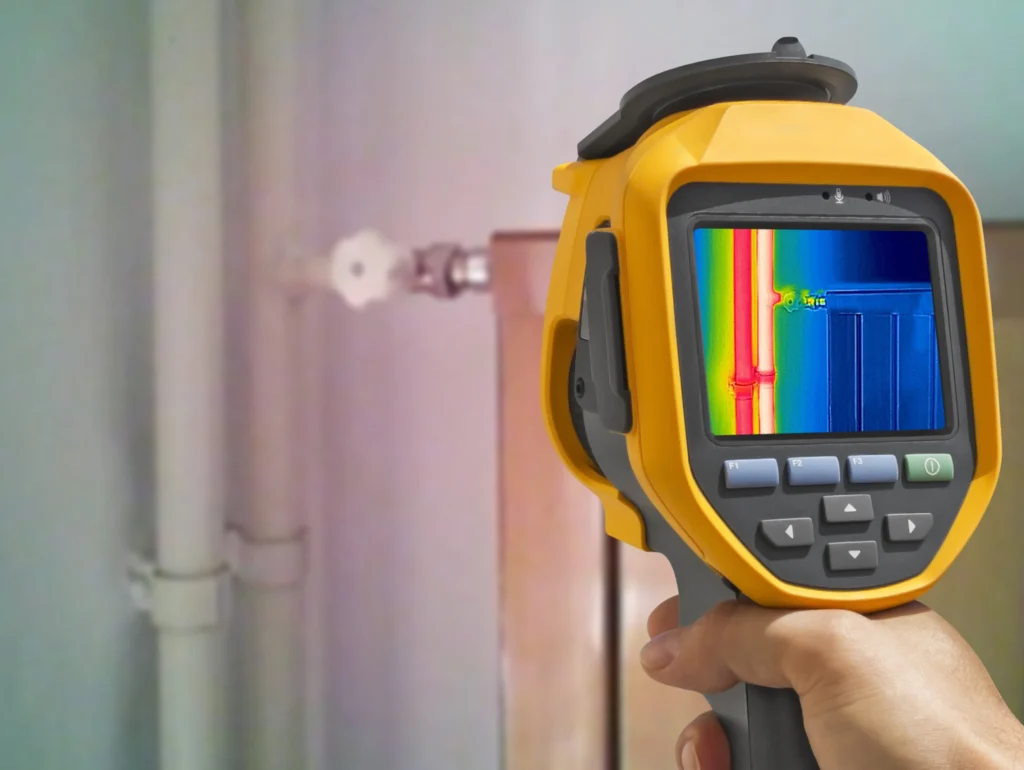
Ever wonder how water damage seems to creep from nowhere?
With advanced infrared technology, leak detection experts scan surfaces, walls, and floors for hidden temperature changes. Even the tiniest water escape leaves a colder or wetter spot, invisible to the naked eye but obvious through thermal imaging.Using a thermal camera, specialists pinpoint plumbing leaks, broken pipes, and moisture intrusion without tearing down ceilings or tiles. It’s fast, accurate, and prevents expensive damage before it spreads. Infrared imaging gives real-time feedback, making it the detective’s best friend when chasing mysterious leaks.These pros blend scientific know-how with hands-on expertise. Instead of guessing, they follow the trail of cold spots and moisture patterns, confirming water escape points swiftly. That means your home or business stays safe, dry, and repair costs are kept low.
Understanding how infrared cameras detect water escape points
Professional leak detection specialists, like we at Ultrices Lekdetectie, use advanced infrared cameras to trace water escape points with pinpoint precision. An infrared camera (also frequently called a thermal imaging camera) detects subtle temperature differences on surfaces. When water leaks behind walls, under floors, or above ceilings, it changes the temperature of surrounding building materials due to evaporation and moisture dissipation. This thermal contrast is invisible to the naked eye, but thermal imaging reveals it unmistakably.Thermography, the process of capturing and interpreting infrared images, is grounded in the scientific principles outlined by experts like Dr. John Snell and organizations such as the Infrared Training Center (ITC). These specialists have developed protocols for interpreting thermal patterns in the context of building science and non-destructive testing. Brands like FLIR Systems and Testo are industry leaders, manufacturing infrared thermal imaging cameras specifically designed for water leak detection in residential, commercial, and industrial environments.Infrared cameras used by professional leak detection companies are ideal for non-invasive investigations. Rather than haphazardly breaking open walls or ceilings, we rely on real-time thermographic visuals to identify thermal patterns associated with water intrusion, capillary rise, and evaporative cooling.
The science behind leak detection with thermal imaging
Water, due to its specific heat capacity and ability to retain coolness, creates cooler zones on building surfaces. As outlined by the American Society for Nondestructive Testing (ASNT), these anomalies can be interpreted as potential “leak signatures”. The cameras translate these temperature differences into color-coded images. Hotter areas appear in warmer colors like red or yellow, while cooler, damp regions show up as blue or purple. These images are called thermograms.This method is so valuable because it unmasks hidden leaks quickly and accurately. Infrared leak detection minimizes property damage, speeds up repairs, and vastly reduces the hit-and-miss guesswork of old-school detection methods.
- Non-intrusive detection technique — No need for breaking walls or floors, preserving building integrity and minimizing disruption for property owners.
- High-speed diagnosis — Enables rapid, efficient localization of water escape points to accelerate repairs and restoration processes.
- Detailed moisture mapping — Generates comprehensive images for insurance documentation and expert reports, supporting scientific evaluation of water damage.
- Prevention of secondary damage — Early identification allows mitigation of mold, structural degradation, and electrical impact, which saves long-term costs.
Key steps: How professionals trace leaks using infrared cameras
At Ultrices Lekdetectie, our process is systematic and tailored for every scenario, from suspected pipe bursts to chronic roof leaks or hidden plumbing failures. Here’s how the professional workflow unfolds:
- Visual site inspection — Our technicians always begin with a physical survey, seeking clues like water stains, musty odors, discoloration, or warped surfaces before using technology.
- Thermal scan deployment — We set up high-sensitivity FLIR or Testo thermal cameras calibrated to precisely detect minute temperature differences.
- Thermographic image analysis — Technicians interpret thermograms on-site, identifying abnormal thermal patterns indicative of moisture infiltration or pooling.
- Cross-verification — We often combine infrared imaging with other tools such as acoustic listening devices, moisture meters (such as the Tramex system), and tracer gas detection for further validation.
- Comprehensive reporting — Our experts generate an in-depth, insurance-ready expert report within 3 working days, detailing evidence and recommended solutions.
Throughout the process, our VCA-certified leak specialists adhere to the latest safety protocols and international ASTM standards for building diagnostics, as recognized in global technical references like Wikidata and the International Organization for Standardization (ISO).
Main types of infrared cameras and their benefits
Not all thermal cameras are created equal. For different building scenarios, various camera types are deployed:
- Handheld thermal imagers — Compact units from brands like FLIR and Testo, perfect for localized surveys in homes and offices.
- High-resolution panoramic scanners — Ideal for large-scale industrial facilities or multi-unit buildings, enabling detailed coverage over significant distances.
- Drone-mounted cameras — Used by advanced specialists to inspect hard-to-reach roofs or building exteriors, especially on large commercial sites.
- Smartphone thermal attachments — Fast, portable solutions for documenting smaller or follow-up jobs.
- Moisture mapping hybrids — Combining built-in moisture measurement and thermal imaging in one platform for even greater diagnostic accuracy.
For maximum accuracy, our technicians use high-sensitivity detectors (often <0.05°C thermal sensitivity), ensuring that even the subtlest evidence of a leak is captured — not just in visible water, but wherever evaporative cooling or hidden moisture lurks.
The full leak detection protocol: From survey to solution
Our entire no cure, no pay leak detection process is built to give you certainty. Here’s a typical protocol as practiced by industry leaders and outlined in authoritative references such as Wikipedia’s articles on thermography and water leak detection:
- Pre-survey consultation — By discussing symptoms and property history, we identify likely leak zones, helping guide efficient camera use upon arrival.
- Thermal imaging session — Images are captured systematically across floors, walls, ceilings, and critical structural elements, focusing on plumbing lines and prior damage areas.
- Data log and review — All thermographic records are archived, analyzed, and referenced in your detailed expert report, satisfying insurers and property management requirements.
- Remediation advice — Our team outlines clear next steps, whether you require urgent repairs, drying interventions, or plumbing rerouting.
You benefit from our transparency — no wall chasing, no unnecessary demolition, just fast, accurate, fixed-price leak detection. With our no cure, no pay guarantee, you only pay if we find and document the problem!
Why choose thermal imaging for leak detection?
Selecting infrared thermography offers unique advantages, favored by property managers, insurance companies, restoration contractors, and thousands of homeowners. Renowned building science experts such as Peter D’Antonio (author of “Infrared Thermography: An Applications Guide”) support its use for:
- Non-destructive investigation — Locates hidden leaks with zero property damage, making it ideal for historic buildings, commercial spaces, or sensitive sites.
- Extensive diagnostic reach — Simultaneously analyses large sections of a building envelope, unlike spot-checking techniques that miss hidden issues.
- Legal and insurance documentation — Supplies robust, science-based reports that typically exceed documentation standards stipulated by regulators and adjusters.
As authorities like the Institute of Electrical and Electronics Engineers (IEEE) and the Royal Institution of Chartered Surveyors (RICS) affirm, thermal imaging is the preferred tool for 21st-century water escape diagnostics.
Get expert leak detection with infrared cameras at a fixed price
Trust Ultrices Lekdetectie when you need precision, expertise, and assurance that your leak will be tracked without unnecessary disruption or cost overruns. We offer a true fixed price of €395 — no extras, no hidden fees, no cure no pay — and serve all of Belgium. Our VCA certification, evident in every project, means your safety and satisfaction are guaranteed. Within 3 days, you’ll have your expert report in hand and a plan to remedy your water problem — all without the hassle, delays, or doubts that come with “guesswork” detection.Let us show you how modern, scientific leak detection works. Read more about onze geavanceerde dienst lekdetectie met infraroodcamera’s en thermografie
lekdetectie met infraroodcamera’s aanvragen
or book your detection today.Discover for yourself why thermal imaging, as practiced by certified professionals and supported by global leaders, is the gold standard for pinpointing covert water leaks. Ready to say goodbye to hidden leaks and high repair bills? Bekijk onze vaste prijs lekkage opsporen service
and get started with us — no cure, no pay, total peace of mind!
FAQ
1. How do infrared cameras actually help you find water leaks?
Infrared cameras detect temperature differences on surfaces. When water escapes from pipes, it often cools or heats the surrounding area, depending on the water temperature. At Ultrices Lekdetectie, we use these cameras to scan walls, floors, and ceilings. A hidden leak might look like a blue (cold) patch in a warm room. By following these thermal patterns, we can accurately pinpoint where water breaks free—often without breaking anything open.
2. Why choose an infrared camera over traditional leak detection methods?
Traditional methods often involve guessing or destructive work, like pulling up tiles. Infrared cameras see what your eyes can’t: they reveal hidden leaks quickly and precisely. At Ultrices Lekdetectie, we use this non-invasive technology, meaning you don’t suffer unnecessary property damage—saving you time, money, and stress.
3. Are there limits to what infrared leak detection can do?
Infrared cameras are powerful, but they aren’t magic. They excel at spotting temperature changes caused by leaks but struggle if temperature differences are minimal. For example, leaks hidden deep inside insulation may require extra investigation. Still, combined with other techniques, we nearly always solve the mystery!
4. Can you use infrared cameras for all types of water leaks?
Most definitely for leaks in walls, floors, and ceilings—especially with heated or cooled water. On flat roofs and in bathrooms, they’re a game-changer. However, leaks very deep underground or far from visible surfaces might need additional tools for confirmation. That’s why at Ultrices Lekdetectie, we often combine methods for the best results.
5. What’s a real-life example of finding a leak with infrared cameras?
Picture this: You notice a damp spot on your living room ceiling, but have no clue where it’s coming from. Our specialist arrives and quickly scans your ceiling with an infrared camera. Immediately, a cold trail snakes from your bathroom upstairs—classic signature of a leaking pipe. Without removing a single tile, we’ve found the escape point and can fix it fast!